Venous & Vascular Conditions
Intra-abdominal Venous Disease (Nutcracker & May-Thurner)
Relieving compressed abdominal and pelvic veins.
Overview
What it is
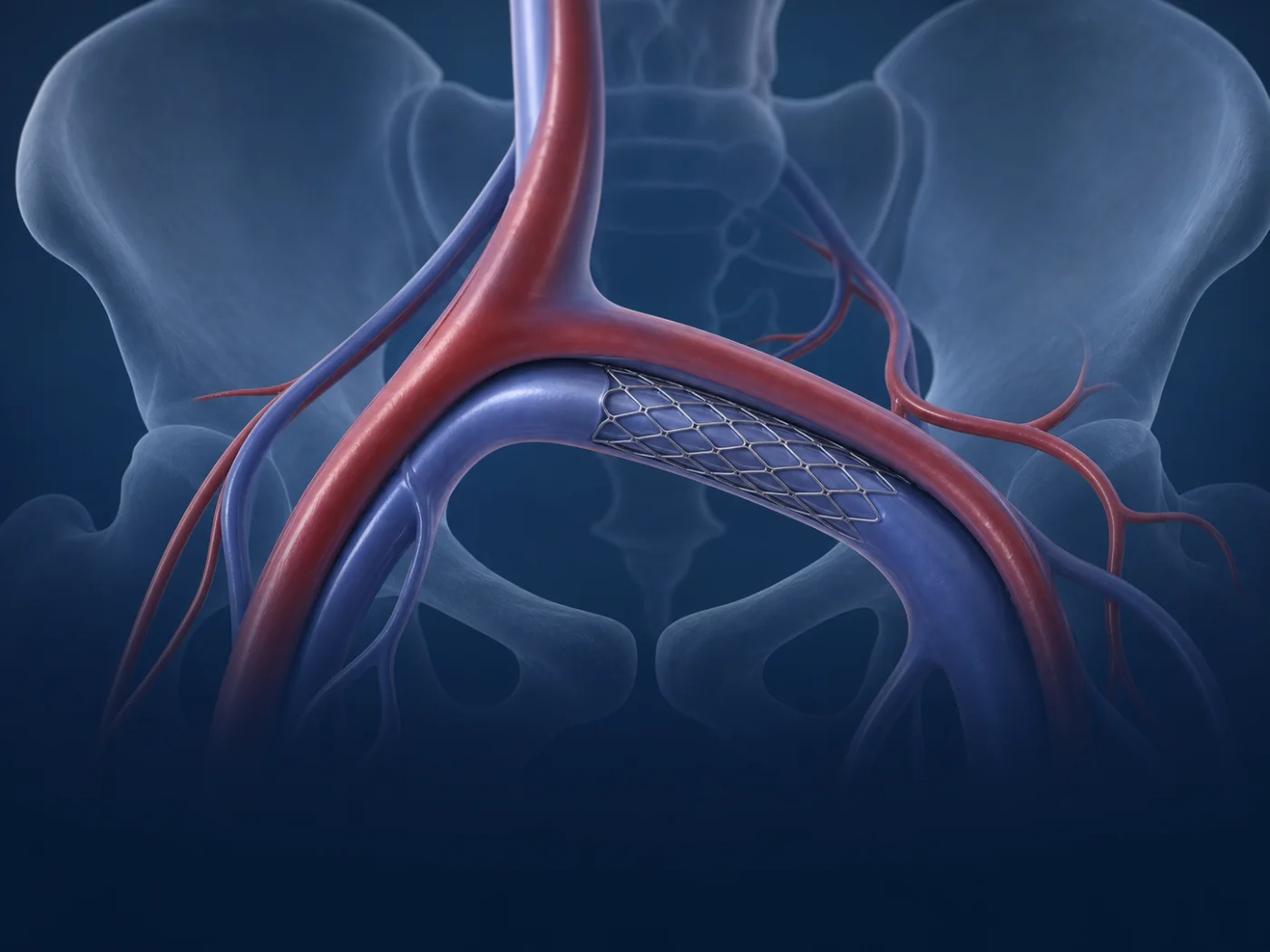
Some patients have veins in the abdomen or pelvis that are compressed — such as the left renal vein (Nutcracker syndrome) or the iliac vein (May-Thurner syndrome). Diagnosis and treatment, often with minimally invasive stenting, can relieve symptoms.
When it’s recommended
- Symptomatic vein compression confirmed on imaging
- Pelvic congestion, leg swelling, or related symptoms
- Anatomy suited to stenting or reconstruction
How it’s performed
Every plan is individualized and reviewed by our multidisciplinary aortic team.
Dedicated venous imaging and pressure assessment
Minimally invasive stenting of the compressed vein
Symptom and flow improvement confirmed
Follow-up to ensure durable relief
Recovery
Recovery & follow-up
Most stenting procedures involve a short recovery, with follow-up to confirm the vein stays open.

Why the Baylor Medicine Center for Aortic Surgery
Complex aortic care is safest in experienced hands. Dr. Oderich and the Center bring more than 7,000 open and endovascular aortic repairs of experience, advanced imaging, and a multidisciplinary team to every case.